
Raghava had been chanting for three years when he first heard about the controversy. A senior devotee in his temple mentioned it casually over prasadam: “That Krishna West thing. You know, where they don’t wear dhotis.” The tone suggested everything. Raghava felt immediate relief. He’d been struggling with the cultural aspects of devotional life, wondering if his discomfort with Indian dress made him a bad devotee. But if other devotees felt the same way, maybe there was hope.
Then came the other conversations. Different senior devotees, different temples, same message: Krishna West was diluting the tradition. Compromising standards. Leading people away from Prabhupada’s vision. Raghava’s relief curdled into confusion. Who was right? And more troubling: why were senior devotees, people who’d dedicated decades to spreading Krishna consciousness, at each other’s throats over this?
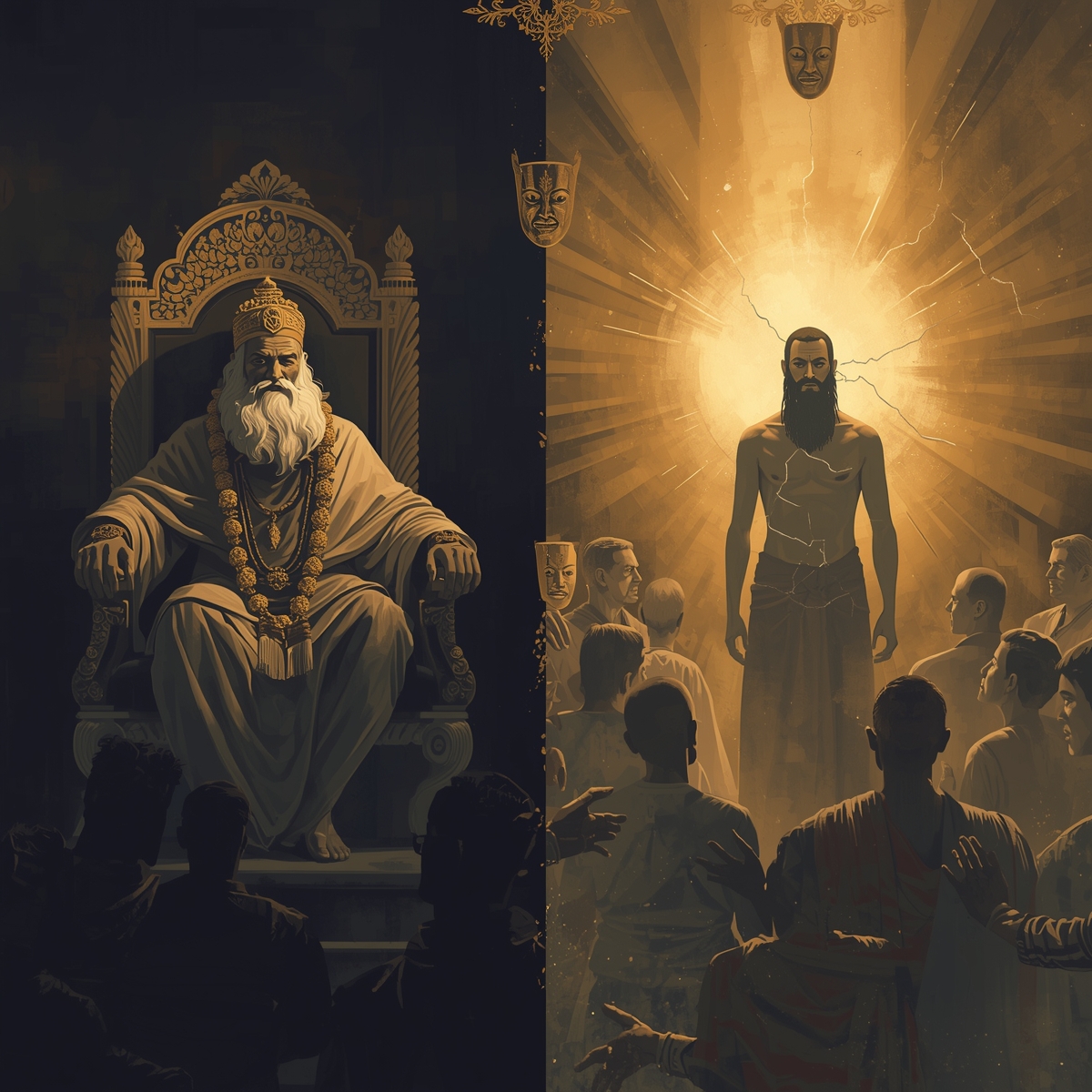
The Krishna West controversy exposes something more fundamental than disagreements about dress codes. It reveals a movement wrestling with an ancient question: how do you transmit timeless truth through changing culture without losing either the truth or the culture?
The Two Visions
Hrdayananda Das Goswami, a Prabhupada disciple and Sanskrit scholar, created Krishna West with a specific goal: reach educated Westerners who were being repelled by cultural barriers. His argument is straightforward: Prabhupada himself made countless adaptations when bringing Krishna consciousness to the West. Why not continue that process?
Bhakti Vikasa Swami and others see something darker. They see accommodation masquerading as adaptation, cultural surrender dressed up as outreach strategy. In their view, Krishna West represents exactly what Prabhupada warned against: changing the philosophy to make it more palatable, losing the tradition’s power in the pursuit of popularity.
Both claim Prabhupada’s authority. Both accuse the other of betraying his mission.
How the Fight Went Public
The controversy erupted when Bhakti Vikasa Swami published a critique on his website. The accusations were heavy: HD Goswami had been “brainwashed” by academia, suffered from “Stockholm syndrome” regarding materialistic scholars, and was leading devotees away from authentic Vaishnava practice. The evidence? Largely a letter from “a devotee in Brazil” and Goswami’s academic credentials.
HD Goswami’s response came in a video that mixed wounded dignity with aggressive counter-attack. He detailed his academic work, explained his rationale, and questioned why his critic relied on one anonymous letter rather than engaging the hundreds of devotees who support Krishna West. Then he went further: he accused Bhakti Vikasa Swami of violating Prabhupada’s instructions by not giving women second initiation, suggesting his critic applied Prabhupada’s words selectively.
The exchange violated every principle of Vaishnava etiquette. Public criticism of senior devotees. Personal attacks. Institutional dirty laundry aired for anyone with internet access. But beneath the ugliness, real questions demanded answers.
The Dress Code Flashpoint
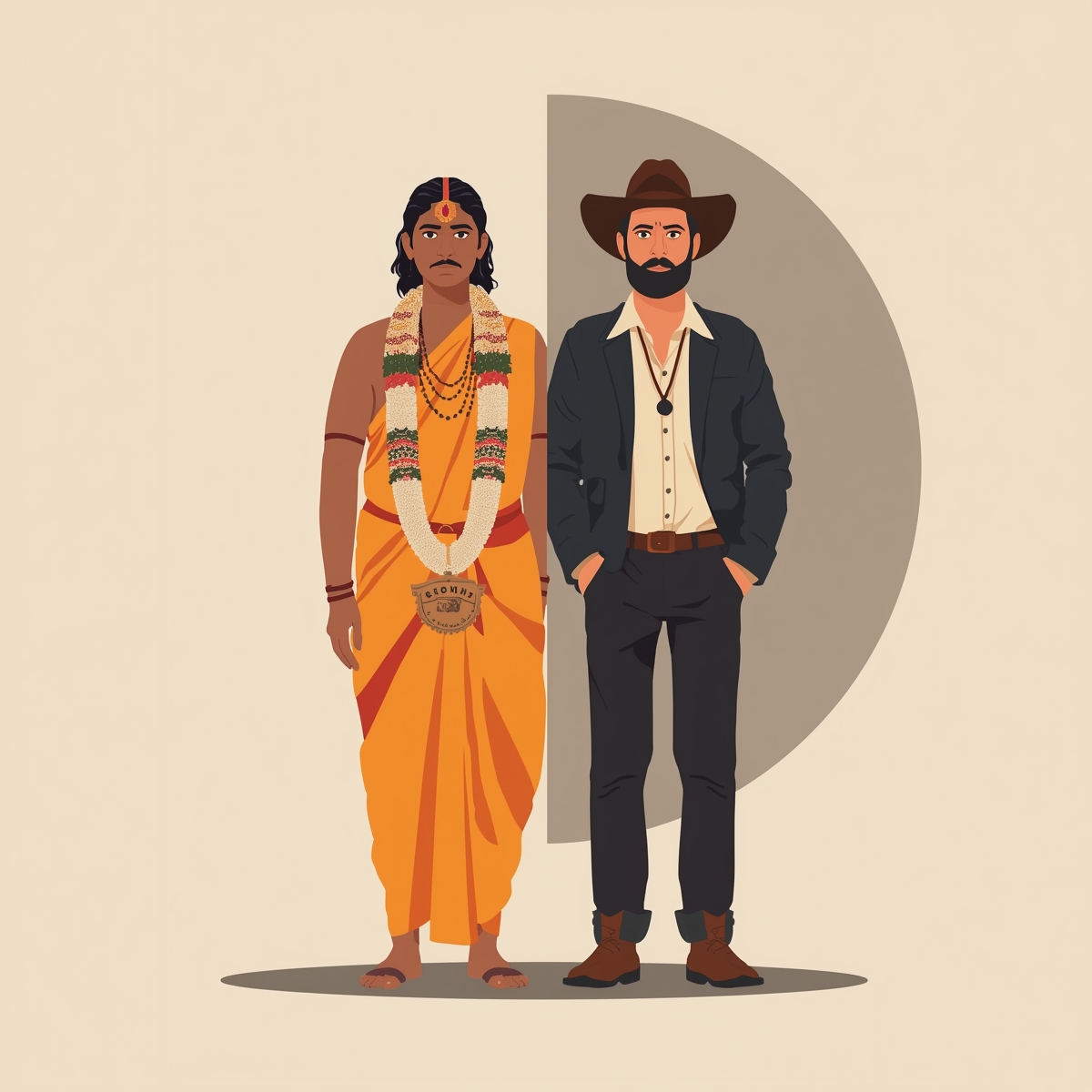
Much of the controversy centers on whether devotees should wear traditional Vaishnava clothing. This sounds trivial until you understand what’s really being argued.
The Traditionalist Position
For critics of Krishna West, dress isn’t superficial. It’s sadhana. When you put on a dhoti and mark your forehead with tilaka, you’re making a public declaration: I am not this body. I am a servant of Krishna. This matters for several reasons:
Scriptural prescription: Hari-bhakti-vilasa and other Vaishnava texts prescribe specific dress for devotees. Yes, Prabhupada said this text was “for householders in India centuries ago.” But he never said it had no authority. He contextualized it, didn’t dismiss it.
Identity formation: External practice shapes internal consciousness. Dressing distinctively reminds you constantly who you are and what you’re supposed to be doing. Remove that reminder, and spiritual identity weakens.
Cultural transmission: When you see someone in devotional dress, you’re seeing living connection to centuries of practitioners. You’re part of something larger than yourself. Break that visual continuity, and the tradition becomes abstract, academic, disconnected from lived practice.
Humility training: Wearing unfamiliar clothing in public requires overcoming false ego. It’s uncomfortable. That discomfort is part of the practice. Eliminate it, and you eliminate an opportunity for purification.
The Adaptation Position
For Krishna West advocates, the traditionalists are confusing cultural accident with spiritual essence. Their counter-arguments deserve serious consideration:
Historical precedent: Lord Chaitanya’s followers didn’t wear special uniforms during public sankirtana. They dressed normally for their culture. The idea that Vaishnava practice requires Indian ethnic dress is historically false.
Psychological barriers: Many Westerners won’t even attend a program if they think they’ll be pressured to adopt foreign cultural practices. You can call this weakness, but it’s reality. Do you want to be right or effective?
Prabhupada’s example: The founder-acharya himself authorized devotees to wear Western clothes for book distribution. He simplified countless rituals. He repeatedly emphasized philosophy over external details. Following his example means continuing adaptation, not freezing practice in 1977.
Results matter: Krishna West claims they’re making more serious, committed devotees than traditional temples. If that’s true, shouldn’t that carry weight?
What Prabhupada Actually Said
Both sides quote Prabhupada selectively. A more complete picture is messier.
Prabhupada clearly valued Vaishnava appearance. “First thing is you must look like a devotee,” he said repeatedly. He established dhoti and sari as temple standards. He emphasized that external practice supports internal consciousness.
But Prabhupada also made radical adaptations. He gave women brahminical initiation. He simplified elaborate Deity worship procedures. He told HD Goswami personally to stay in university and learn to communicate with educated people. Most tellingly, he repeatedly invoked desha-kala-patra: time, place, and circumstance determine appropriate application.
The question isn’t “What did Prabhupada say?” It’s “How do we apply what Prabhupada said in situations he never directly addressed?”
The Academic Engagement Question
HD Goswami’s defense relies heavily on his academic work. Prabhupada ordered him to stay in university, so he’s following orders by engaging scholarly culture. He’s translating Prabhupada’s teachings into academic language, just as the Six Goswamis translated Vedic wisdom into the scholarly idioms of their time.
This argument has force. The Six Goswamis were formidable academics who mastered grammar, poetics, logic, and philosophy. They engaged opposing schools on their own terms. Ramanuja wrote sophisticated commentaries addressing Advaita arguments. Madhvacharya debated Buddhist logicians using their logical systems. Lord Chaitanya himself defeated scholars through scholarship.
But here’s what troubles the critics: none of those acharyas accepted their opponents’ epistemological framework. They used logical tools without granting that logic validates spiritual truth. They mastered scholarly methods without submitting to scholarly authority structures.
The concern isn’t that HD Goswami reads academic philosophy. It’s whether engaging academic culture for decades inevitably shapes how you think, what you value, whose approval matters. The “Stockholm syndrome” accusation, however crudely stated, points to a real psychological pattern: long-term engagement with any culture tends to internalize that culture’s assumptions.
Academia operates on premises fundamentally opposed to Vedic epistemology:
- Empirical observation trumps textual authority
- Peer review validates truth claims
- Historical criticism treats scriptures as human products
- Logical consistency serves as final arbiter
You can use academic language without accepting academic premises. But it requires constant vigilance. The question is whether that vigilance can be maintained across decades of immersion.
The Unity Crisis
Perhaps most disturbing is what this controversy reveals about ISKCON’s internal divisions.
HD Goswami admits that “so many leaders in ISKCON have been so insulting and critical of Krishna West” that he’s essentially stopped trying to work within the movement’s institutional structures. He’s making devotees, but they’re not integrated into mainstream ISKCON. He’s preaching successfully, but in parallel to the established organization.
This should alarm everyone. When a senior, capable preacher concludes he can’t work within the institution because too many leaders oppose his methods, something has broken down. Either he’s dangerously wrong and should be corrected through institutional channels, or the institution has become too rigid and should reform itself. Parallel structures aren’t a solution; they’re an admission of failure.
The Vedic principle is clear: maha-jano yena gatah sa panthah. Follow the great souls. When great souls disagree publicly and vehemently, newcomers and aspiring devotees are left confused. Who do you follow? Which example is correct?
The Epistemological Trap
At the deepest level, this controversy exposes competing views about how spiritual truth is validated.
Traditional Vedic epistemology establishes a clear hierarchy: revealed scripture (shruti) stands supreme, followed by remembered tradition (smriti), followed by realized teachers (acharyas), with logic and perception serving as tools but never overriding higher authorities. Truth flows downward through guru-parampara.
Academic epistemology inverts this. Empirical observation and logical analysis serve as ultimate validators. Texts are treated as historical documents to be critically examined. Authority claims are suspected, not presumed. Peer consensus validates findings.
Can you genuinely engage the second system without being shaped by it? HD Goswami says yes: he’s translating Vedic truth into academic language, not accepting academic authority. His critics say no: the language you speak shapes the thoughts you can think.
Both might be right. Translation is possible, but it’s also dangerous. Every translator knows: something always gets lost or transformed in translation. The question is whether what’s gained justifies what’s risked.
What Real Tradition Requires
Here’s what neither side seems willing to acknowledge: living tradition requires both preservation and adaptation.
Freeze tradition in one cultural form, and it becomes ethnic nostalgia rather than universal truth. The Gaudiya Vaishnava tradition didn’t remain frozen in 16th-century Bengal. It evolved through different cultural contexts while maintaining philosophical continuity.
But adapt too readily, and tradition dissolves into cultural accommodation. Every religious movement that prioritized “relevance” over doctrinal integrity eventually lost both. Liberal Protestantism wanted to make Christianity acceptable to modern intellectuals; it ended up with churches that are neither Christian nor culturally influential.
The tension is real and can’t be resolved by choosing one side. The Six Goswamis embodied both: rigorous philosophical orthodoxy combined with cultural creativity. They preserved essence while adapting form.
The question is: who has the realization to know which is which?
The Authority Vacuum
This controversy reveals a deeper problem: ISKCON lacks clear institutional mechanisms for resolving such disputes.
In traditional Vaishnava culture, senior acharyas would privately discuss such issues, reach consensus or agree to disagree respectfully, and present united guidance to practitioners. What you wouldn’t see is public mud-slinging based on anonymous letters and wounded pride.
But ISKCON doesn’t have that system. The GBC lacks the spiritual authority or institutional effectiveness to mediate such disputes authoritatively. So disagreements become public controversies, with devotees forced to choose sides based on incomplete information and personal loyalties.
Both HD Goswami and Bhakti Vikasa Swami violated basic Vaishnava etiquette by making this public. According to Upadesamrita, one should not find fault with devotees. According to every traditional standard, you first address concerns privately through proper channels before going public.
But proper channels have failed. That’s the institutional crisis this controversy exposes.
The Path Through
If you’re a sincere practitioner trying to navigate this controversy, here’s what matters:
First, recognize both sides have legitimate concerns. The traditionalists are right that external practices matter, that cultural continuity has value, that accommodation can become capitulation. The adapters are right that unnecessary cultural barriers prevent people from accessing Krishna consciousness, that Prabhupada himself modeled flexibility, that focusing on essence over form has scriptural support.
Second, examine your own motivation. Are you attracted to Krishna West because it makes devotional life more comfortable? Or because you genuinely believe it’s more effective for spreading Krishna consciousness? The first is lazy; the second might be legitimate. Be honest with yourself.
Third, maintain philosophical clarity regardless of external forms. Whether you wear a dhoti or jeans, you’re still required to chant attentively, study scripture seriously, and apply Krishna conscious principles to your life. If changing external practices leads to weakening internal standards, you’ve made a mistake. If it strengthens your practice by removing unnecessary barriers, you’ve chosen wisely.
Fourth, respect those who choose differently. If you find traditional practice inspiring and effective, pursue it wholeheartedly. If you find adapted forms more conducive to your practice, follow that path sincerely. But don’t condemn the alternative. The movement needs both preservation and adaptation; it just needs them done with integrity.
Finally, focus on your own realization rather than institutional politics. Ultimately, you’re responsible for your spiritual development. The debates about methodology will continue. Your time for spiritual practice is limited. Don’t let others’ arguments become your distraction.
What’s Really at Stake
This controversy matters because it’s not really about dress codes or academic engagement. It’s about whether ISKCON can navigate the tension every spiritual tradition faces in modernity: How do you preserve authentic practice while engaging contemporary culture?
Get it wrong in one direction, and you become an ethnic curiosity with no broader relevance. Get it wrong in the other direction, and you lose the transformative power that made the tradition valuable in the first place.
The answer probably isn’t choosing one approach exclusively. It’s maintaining both in creative tension, with different practitioners and projects emphasizing different aspects according to their realization and calling.
But that requires something currently lacking: institutional maturity, spiritual humility, and willingness to value the movement’s unity over being proven right.
Until that develops, expect more controversies like this. And don’t let them shake your faith in Krishna or Prabhupada’s mission.
The tradition is bigger than any current dispute. Your devotional life is more important than which side wins the argument.
Keep chanting. Keep serving. Keep studying. The rest will work itself out, or it won’t. Either way, Krishna consciousness remains as powerful and transformative as ever for those who practice it sincerely.
That’s what actually matters.
Sources: