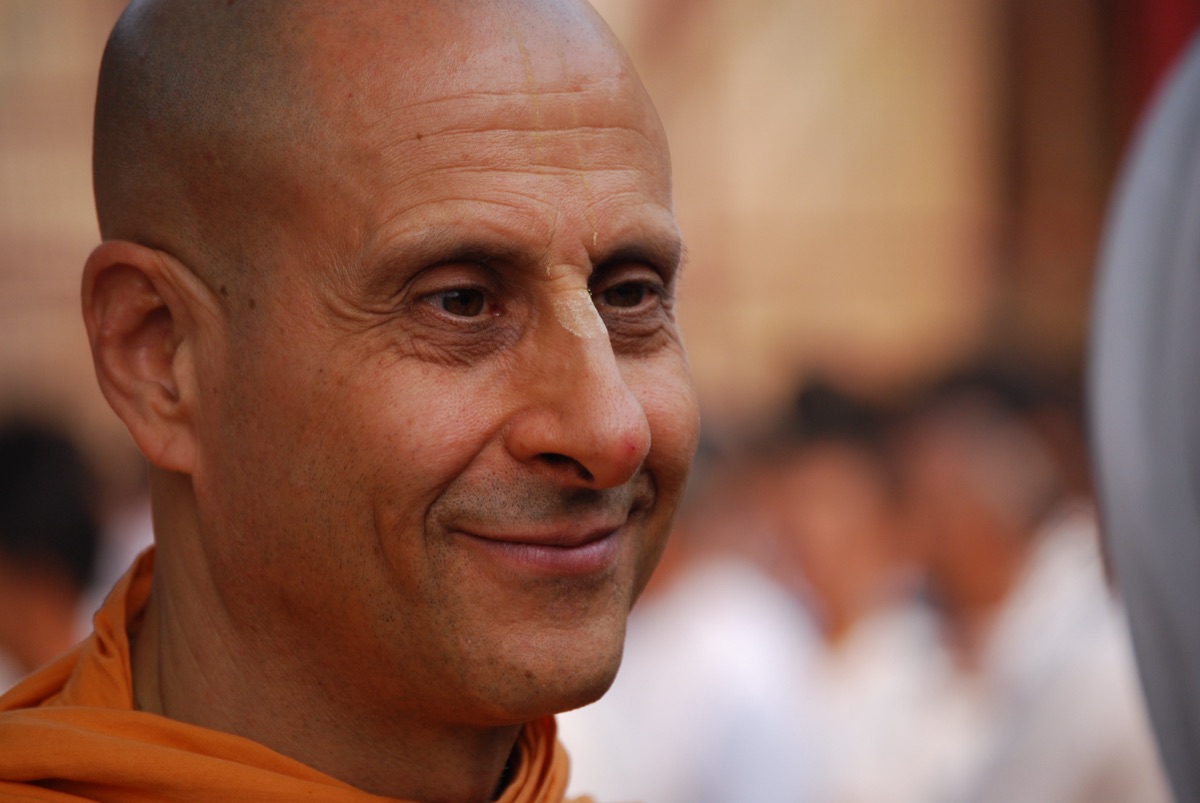

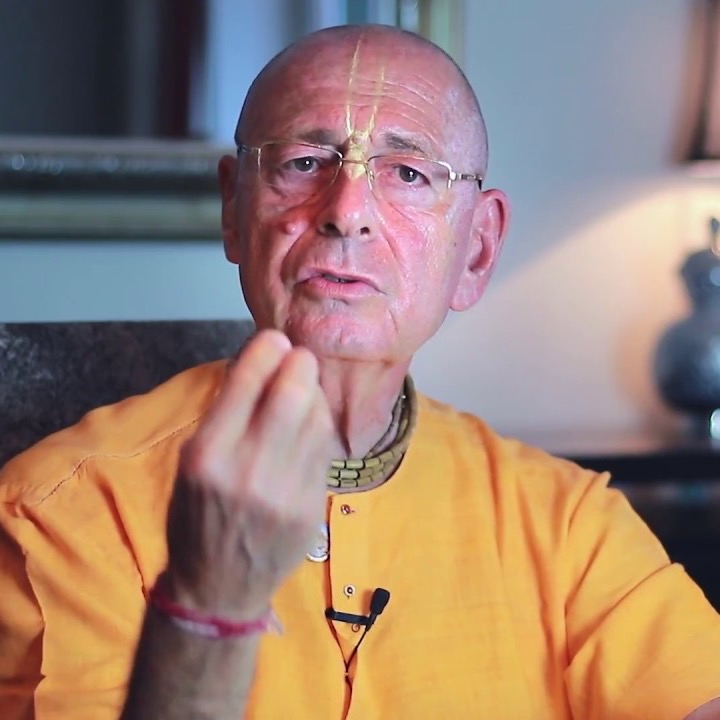
In November 2022, a letter by Sivarama Swami — GBC member for nearly four decades, architect of Krishna Valley in Hungary, prolific author, and spiritual master to thousands — surfaced publicly. Written to the GBC body in response to a Child Protection Office (CPO) decision against Bhakti Vidya Purna Swami (BVPS), a guru found responsible for decades of severe physical and sexual abuse of children at the Mayapur gurukula, the letter revealed not a lapse in judgment but a window into how institutional loyalty can colonize moral reasoning.
The Letter and Its Priorities
In his November 6, 2022 letter, Sivarama Swami wrote of BVPS: “BVPS committed abuse but he is not a born abuser. He is a troubled person and he succumbed to temptation. But he gave 50 years of his life to ISKCON, and his abuse aside, he did valuable service.”
He cited Bhagavad-gita 9.30 — the api cet su-duracaro verse — posing it as a GBC discussion topic: “I didn’t write that. Krsna said it. How do we incorporate Bhagavad-gita into the way we deal with abusers?” He advocated for financial packages, counseling, and institutional support for BVPS. He called for replacing CPO directors, claiming bias. For the victims, the letter offered rhetorical questions. For the abuser, concrete proposals.
The asymmetry was stark. Specifics for the abuser. Sentiment for the victims.
The Misapplication of Scripture
The philosophical heart of this failure lies in the misuse of BG 9.30:
“Even if one commits the most abominable action, if he is engaged in devotional service he is to be considered saintly because he is properly situated in his determination.”
Srila Prabhupada’s purport is unambiguous: “One should not misunderstand that a devotee in transcendental devotional service can act in all kinds of abominable ways; this verse only refers to an accident due to the strong power of material connections.” And further: “No one should take advantage of this verse and commit nonsense and think that he is still a devotee.”
BG 9.31 supplies the decisive qualifier: ksipram bhavati dharmatma — “He quickly becomes righteous.” The word ksipram (quickly) is essential. The genuine devotee who accidentally falls corrects himself rapidly. BVPS’s abuse spanned decades across multiple investigations. There was no ksipram. There was only institutional entropy.
According to the CPO report and testimony, the abuse was systematic, included severe beatings and sexual and physical abuse of boys and girls, and was met with minimal remorse.
To invoke BG 9.30 here is apasiddhanta — deviation from established scriptural conclusions. It transforms a verse of hope for the sincerely struggling devotee into a shield for systematic predation.
What does shastra actually demand? SB 5.5.18 states: “One who cannot deliver his dependents from the path of repeated birth and death should never become a spiritual master, a father, a husband, a mother, or a worshipable demigod.” If a guru who merely fails to deliver is disqualified, what of one who actively destroys? And BG 3.21 warns: “Whatever action a great man performs, common men follow.” When a leader of this stature uses scripture to advocate for an abuser, the message absorbed by the entire community is: the institution protects its own, even at the cost of the vulnerable.
Damage Control: The Zoom Conference
On December 4, 2022, Sivarama Swami held a Zoom conference with disciples. Two senior disciples asked “devil’s advocate” questions compiled from online reactions. The transcript reveals a consistent strategy: admitting formal error while defending the substance.
“The letter was private.” He framed the problem as one of audience rather than content — as though the ideas would have been acceptable if only the right people had seen them.
“I didn’t remember the details.” Despite being GBC chairman in 1991, knowing the 2000 CPO report, and hosting BVPS in Hungary for 25+ years, he claimed poor memory. Yet he recalled selectively — asserting “no complaints” during BVPS’s Hungarian visits while claiming inability to recall the severity documented in reports he had access to.
“I gave him a chance.” He compared allowing BVPS to travel with giving fallen GBC members second chances. The comparison collapses: philosophical deviation is categorically different from child rape.
“Hindsight is 20/20.” He compared his failure to the West’s failure to stop Putin — revealing grandiosity and deflection. Geopolitics involves genuine complexity. Protecting children in a community you manage requires only basic moral clarity.
When pressed on whether he still supported a “financial package” for BVPS, he equivocated: “I’m just leaving it up to them. It’s just a relevant issue.” But the letter’s proposals were specific. The hedging came only after exposure.
The Apology as Reputation Management
The December 7, 2022 follow-up was framed as an apology. In substance, it was reputation management. The bulk explained and justified his own actions rather than centering victims. “The whole system failed” and “we all share responsibility” diluted accountability to meaninglessness. He retracted “not a born abuser” only on a technicality — “I do not know how he was born” — not recognizing it functioned to humanize a predator. While the original letter contained specific proposals for BVPS, the apology offered victims only vague aspirations: “do better,” “take added precautions.”
Why the Institution Comes First
Sivarama Swami’s background taught him that holding an institution together is what matters most. That instinct built Krishna Valley in Hungary — a real achievement. But the same instinct that builds strong institutions can blind a person to what those institutions are doing wrong.
When keeping the organization alive becomes the highest value, the organization itself becomes sacred. And the people inside it — especially the vulnerable — become less important than its survival.
The bitter irony: a man who should have recognized what happens when institutions look away from suffering became the one looking away.
Ideological Possession
This site, analyzing ISKCON institutional failures, invokes Dostoevsky’s concept of ideological possession: “The possessed person does not feel possessed. They feel righteous.”
Sivarama Swami’s case fits precisely. His letter is not a cynical operator’s work. It is the work of a sincere believer whose institutional logic has colonized his moral reasoning so thoroughly that he can cite scripture in defense of a child rapist and experience it as philosophical inquiry rather than moral catastrophe.
The pattern maps perfectly: institutional silence over decades of hosting BVPS despite knowing his history; minimization (“he succumbed to temptation,” “50 years of service”); blame redistribution (“the whole system failed”); scripture as shield (BG 9.30 reframing an abuser as potential saint); conditional accountability (“I apologize for the impression” rather than for the content).
Composure Is Not Character
The most troubling aspect is what makes it hardest for followers to process: Sivarama Swami maintains impeccable composure. Disciplined sadhana, learned lectures, dignified behavior. No crude markers of moral failure.
But Gaudiya Vaishnavism never taught that externals alone measure advancement. SB 1.1.2 declares its subject dharma projjhita-kaitavah — religion purged of all cheating (kaitava). The most dangerous deviations are subtle — they wear the garments of piety. Bhaktisiddhanta Sarasvati Thakura spent his life combating practitioners who maintained external devotion while lacking its substance: genuine compassion (daya) and the courage to prioritize the vulnerable over the powerful.
The Nectar of Instruction (verse 1) lists vaco vegam — the urge to speak — as the first impulse a qualified leader must control. Sivarama Swami’s letter was not a private musing; it was a positional statement from one of ISKCON’s most authoritative voices deploying sacred texts in defense of an abuser. The failure to restrain that impulse is itself a disqualification by the tradition’s own standards.
Caitanya Mahaprabhu modeled the opposite. When Junior Haridasa committed a single subtle impropriety — speaking privately with a woman to obtain rice for the Lord — Mahaprabhu’s rejection was total and permanent (CC Antya 2). If such severity was warranted for one subtle transgression, the tradition’s position on decades of systematic child abuse is not ambiguous.
Composure in the face of one’s own complicity is not equanimity. It is insulation. A man who can discuss the documented rape of five-year-olds and then move to “financial packages” for the perpetrator has achieved not transcendence but disconnection.
The Captured Institution
Sivarama Swami is not an aberration within ISKCON’s institutional culture. He is its most refined product — a leader combining genuine devotional sincerity, administrative competence, and personal discipline with a moral blind spot large enough to accommodate decades of complicity in protecting a child abuser.
The Gaudiya Vaishnava tradition demands more than composure. It demands daya — compassion — and compassion begins with protecting those who cannot protect themselves. When the tradition’s scriptures are deployed to argue for the institutional rehabilitation of a child rapist while victims receive rhetorical questions, the tradition itself is under attack — from within, by those who love the institution more than the truth it was built to serve.
The greatest danger to a spiritual tradition is not opposition. It is capture — by those who master its language, internalize its forms, and deploy its authority for institutional self-preservation rather than spiritual transformation. Sivarama Swami’s letter, his Zoom conference, and his calibrated apology constitute a case study in this capture.
The protection of children is not a philosophical discussion topic. It is not “food for thought.” It is the non-negotiable baseline of any community that claims to serve God. That this needs to be stated at all is itself the indictment.
Sources: Sivarama Swami’s November 6, 2022 letter to the GBC; his December 7, 2022 public response; transcript of his December 4, 2022 Zoom conference with disciples; contextual analysis from lightofdharma.com.