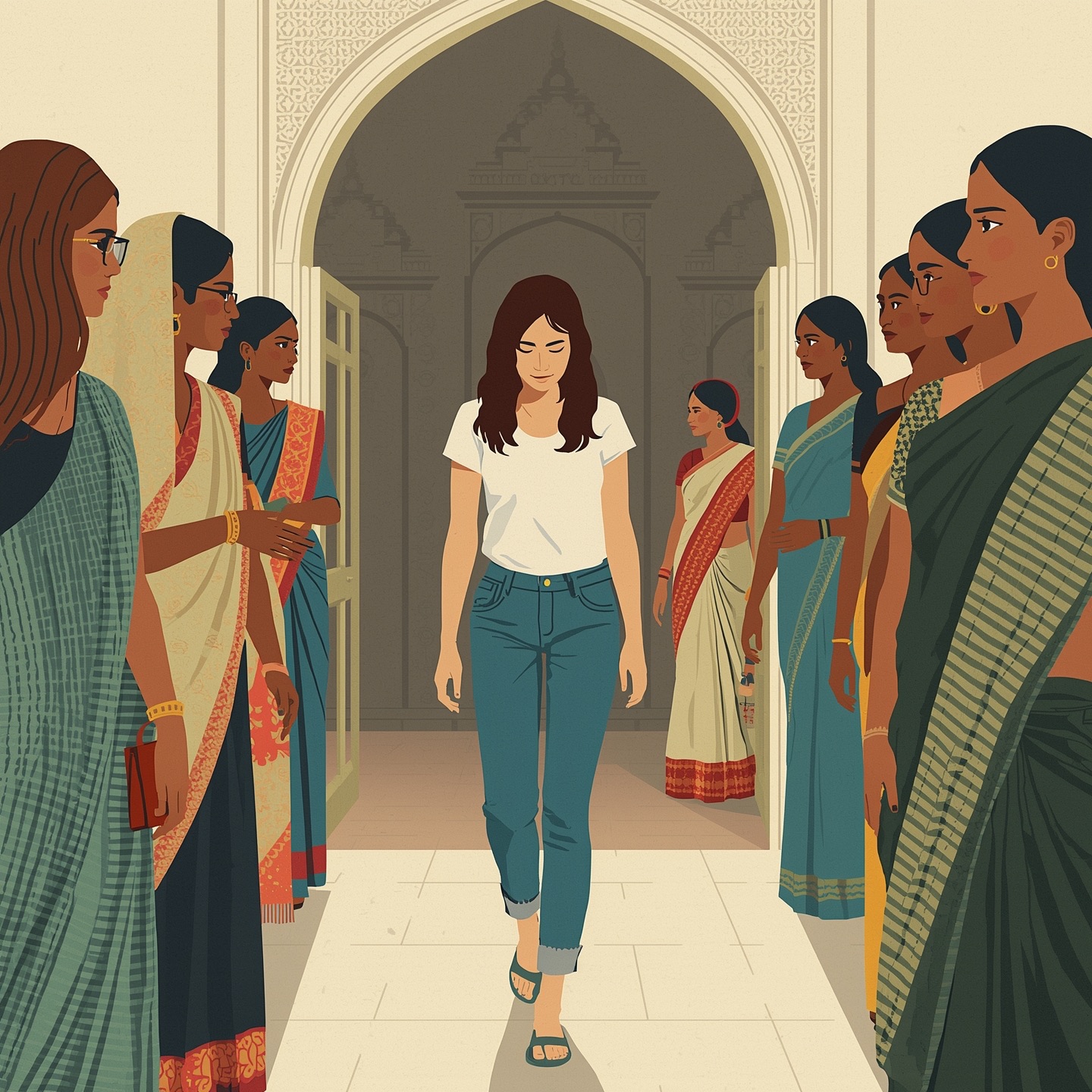


The history of education in ISKCON represents one of the movement’s most painful chapters—a story of idealism corrupted by institutional failure, children traumatized by systemic abuse, and a decades-long struggle to reconcile Prabhupada’s spiritual vision with the practical realities of raising Krishna conscious children in the modern world. Today, as many ISKCON families turn to homeschooling and cooperative learning models, critical questions remain: Have we truly learned from the past? And are current educational approaches aligned with Prabhupada’s original instructions?
Prabhupada’s Original Vision: Love-Based Spiritual Education
Srila Prabhupada’s vision for gurukula was fundamentally different from what eventually developed in ISKCON boarding schools. His instructions emphasized several core principles that would later be largely ignored or misunderstood.
First and foremost, Prabhupada taught that gurukula meant spiritual education—studying scriptures under the direction of the guru, not primarily material education. He stated clearly: “The first business of gurukula is to teach children to become self-controlled (santa, danta), with literary education and grammar being secondary.”
Perhaps most critically, Prabhupada emphasized that “everything should be done on the basis of love, not strictness.” Students should act automatically out of love for their teacher, not from fear or coercion. In the traditional Vedic model, it is precisely because the student loves his teacher that he is willing to hear and follow instructions willingly.
Regarding curriculum, Prabhupada’s instructions were surprisingly modest. He wanted children trained in early rising, attending mangal arati, and elementary education: arithmetic, alphabet, and study of his books. Students should learn English and Sanskrit so they could read the scriptures—“That will make them MA, PHD. That much I want. Other things are external,” he said. He explicitly stated he didn’t want “big big scholars” for research work, explaining that everything is already in perfect order in the Vedic scriptures, beautifully summarized in Srimad-Bhagavatam, with Bhagavad-gita as the primary study.
The age range Prabhupada specified was also limited: gurukula was for children ages 5-12 years, after which they would transition to varnasrama (occupational training based on natural inclination). And critically, he envisioned gurukula as “our most important project” because “if the children are given a Krishna Conscious education from early childhood then there is great hope for the future of the world.”
The Boarding School Disaster: 1971-1990
What actually developed in ISKCON’s gurukula system bore little resemblance to Prabhupada’s vision of love-based spiritual education. Instead, the boarding school model that dominated from the early 1970s through the late 1980s became a site of systematic institutional failure and widespread child abuse.
Between 1970 and 1988, an estimated eight hundred ISKCON children suffered criminal neglect, emotional, physical, or sexual abuse, with most abuse occurring in the boarding school system. Children were cloistered in gurukulas and totally isolated from daily temple life. In most cases, parents were only allowed to see their children once or twice a year—a practice that directly contradicted both common sense and Prabhupada’s emphasis on love as the foundation of education.
The authoritarian culture that pervaded ISKCON in the post-Prabhupada era extended into the gurukulas with devastating consequences. Teachers and administrators, many of whom were themselves young and ill-prepared for their responsibilities, wielded unchecked power over vulnerable children. Physical punishment was common and often excessive. Emotional abuse was endemic. Sexual abuse occurred with disturbing frequency.
The institutional response to early allegations was characterized by denial, cover-up, and prioritizing the movement’s reputation over children’s safety. Rather than investigating complaints thoroughly and removing abusers, ISKCON leadership often simply transferred problematic teachers to other locations, where they continued to abuse new victims.
Investigations, Lawsuits, and Institutional Reckoning
The full scope of the gurukula abuse scandal only became public knowledge in the 1990s. As survivors began speaking out, ISKCON faced both moral and legal accountability.
In 1998, ISKCON formed the Office of Child Protection (CPO), headed by ISKCON disciples charged with helping victims, preventing future incidents, and investigating and punishing past abusers. While this represented a step toward institutional accountability, it came decades too late for the hundreds of children who had already suffered.
In October 2001, 91 plaintiffs filed a four hundred million dollar lawsuit in a Texas district court against more than a dozen Hare Krishna temples. The lawsuit exposed the systematic nature of the abuse and ISKCON’s institutional failures in protecting children. The legal proceedings forced the movement to confront the devastating consequences of prioritizing institutional expansion over child welfare.
The Shift to Day Schools and Homeschooling
The decline in ISKCON boarding schools began in the 1980s and accelerated through the early 1990s. From the late 1970s onward, allegations of child abuse threatened the safety and tarnished the reputation of these institutions. By the mid-1990s, most ISKCON boarding schools had closed.
Local day schools within ISKCON communities—such as those in Alachua, Florida, Dallas, and Los Angeles—replaced boarding schools as the prominent educational model. This shift represented a crucial recognition that children needed daily contact with their parents and should not be isolated from family and broader community life.
Simultaneously, many ISKCON families began turning to homeschooling and cooperative learning models. Organizations like BKG Academy emerged as homeschool cooperatives operating within ISKCON, working closely with parents to create customized, comprehensive bhakti-based education for their children. This model returned educational responsibility primarily to parents while providing community support and resources.
Ongoing Challenges and Recent Failures
Despite reforms, problems have continued into the 21st century. The case of Bhakti Vidya Purna Swami illustrates how institutional dysfunction persisted even after the boarding school era ended.
In 2000, CPO investigations centered on allegations from the 1980s-1990s when Bhakti Vidya Purna Swami served as principal of the Bhaktivedanta Academy Gurukula in Mayapur. He admitted to “imposing excessive physical punishments.” However, despite these admissions and victim testimonies, consequences were minimal at the time.
More troublingly, a subsequent investigation in 2022 revealed new allegations of sexual abuse of a minor and leadership abuse, leading to severe sanctions against the same individual. The fact that someone with a documented history of abusive behavior remained in positions of authority for decades reveals ongoing institutional failures in child protection.
Recent GBC actions suggest awareness of these problems: mandatory child protection training, facilitating outside review of schools in Mayapur and Vrindavana, supporting conversion of Mayapur Gurukula from boarding to day school, and providing additional funds for the Child Protection Office. Yet observers note that “over time much of ISKCON became complacent, with temples that are mandated to have local Child Protection Teams growing lax, and the numbers of volunteers willing to serve dwindling, while funding from the GBC diminished.”
Modern Homeschooling: Closer to Prabhupada’s Vision?
Today’s ISKCON homeschooling movement represents a potential return to principles closer to Prabhupada’s original vision—particularly the emphasis on parental love, individualized attention, and integration of spiritual and practical education.
Advantages of the homeschool model:
- Parental involvement: Children remain with parents who (ideally) provide the love-based environment Prabhupada emphasized
- Flexibility: Curriculum can be adapted to individual children’s needs and inclinations
- Integration: Spiritual practice integrates naturally with daily family life rather than being compartmentalized
- Protection: Parents can directly monitor their children’s wellbeing and educational experience
- Community without isolation: Homeschool cooperatives provide peer interaction and community resources without isolating children from families
Remaining challenges:
- Quality variation: Educational quality depends heavily on individual parents’ capacity, knowledge, and resources
- Socialization questions: Children need sufficient peer interaction and exposure to diverse perspectives
- Resource access: Not all families have access to quality homeschool cooperatives or educational materials
- Parental burnout: Homeschooling requires significant time and energy that not all parents can sustain
- Standardization concerns: Lack of consistent standards may leave some children educationally unprepared
The Critical Question: Have We Truly Reformed?
The transition from boarding schools to day schools and homeschooling addresses some of the most egregious problems of the past—particularly the isolation of children from parents and the concentration of unchecked authority in the hands of teachers and administrators. However, deeper questions about ISKCON’s institutional culture and its approach to education remain unresolved.
First, has ISKCON genuinely internalized Prabhupada’s emphasis on love as the foundation of education? The persistence of authoritarian attitudes in some quarters, the ongoing revelations of abuse even in reformed institutional settings, and the documented complacency in child protection efforts suggest that cultural transformation remains incomplete.
Second, are current educational approaches—whether in day schools or homeschools—actually implementing Prabhupada’s vision of simple, spiritually-focused education? Many ISKCON schools now emphasize academic achievement and preparation for university education. While this may be practically necessary in the modern world, it represents a significant departure from Prabhupada’s instructions that “other things are external” compared to scriptural study and spiritual practice.
Third, have we created adequate accountability structures? The fact that known abusers continued in positions of authority decades after initial allegations suggests that institutional accountability mechanisms remain inadequate. True reform requires not just policy changes but genuine cultural transformation that prioritizes children’s wellbeing over institutional reputation and individual devotees’ status.
Conclusion: A Path Forward
The history of education in ISKCON stands as a sobering reminder that good intentions—even spiritual idealism—are insufficient without wisdom, humility, and genuine accountability. Prabhupada’s vision of love-based spiritual education for children was corrupted by an authoritarian institutional culture that prioritized expansion and control over children’s actual wellbeing.
The shift toward homeschooling and family-based education represents a potential return to core principles of parental love and individualized spiritual development. However, this transition will only represent genuine progress if it is accompanied by:
- Continued vigilance: Robust child protection protocols that are actually enforced, not merely adopted as policy
- Cultural transformation: Movement away from authoritarianism toward genuine care and respect for children as individuals
- Honest accountability: Willingness to investigate abuse allegations thoroughly, remove offenders from positions of authority, and support survivors
- Spiritual authenticity: Educational approaches that genuinely prioritize spiritual development over material achievement
- Parental empowerment: Support for parents as primary educators while providing community resources and oversight
The children of ISKCON deserve better than what previous generations received. Whether through homeschooling, day schools, or other models, any educational approach must place children’s wellbeing and spiritual development at the center—precisely as Prabhupada instructed from the beginning. Until ISKCON demonstrates through sustained action that it has learned from the past and genuinely transformed its culture, every family must carefully evaluate whether institutional education or homeschooling better serves their children’s needs.
The ultimate test is not which model we choose, but whether we are finally ready to implement Prabhupada’s fundamental principle: “Everything should be done on the basis of love.”